
Why Growing Companies Lose Operational Visibility


Introduction
Growth changes how a business operates.
The systems that worked when your team was small often struggle to keep up as more people, projects, and priorities are added.
At first, the signs are easy to overlook.
A project update is missed. A deadline shifts without everyone knowing. Different departments begin working toward different priorities.
Before long, leaders find themselves asking the same questions over and over.
Where are we with this project?
Who's responsible for the next step?
Why am I only hearing about this now?
These aren't necessarily signs of poor project management. More often, they're signs that the business has lost operational visibility.
Operational visibility is simply having a clear understanding of what's happening across your projects, teams, and priorities without constantly chasing updates. As organizations grow, maintaining that visibility becomes more difficult unless the way work is managed evolves alongside the business.

Why Visibility Starts to Decline
In smaller organizations, visibility happens naturally.
Leaders are involved in most conversations, projects are easier to monitor, and decisions are made quickly because everyone is working closely together.
Growth changes that.
Teams become more specialized. Projects overlap. Departments develop their own priorities and ways of working.
None of this is a problem on its own.
The challenge is that many businesses continue relying on the same informal communication methods they used when they were much smaller.
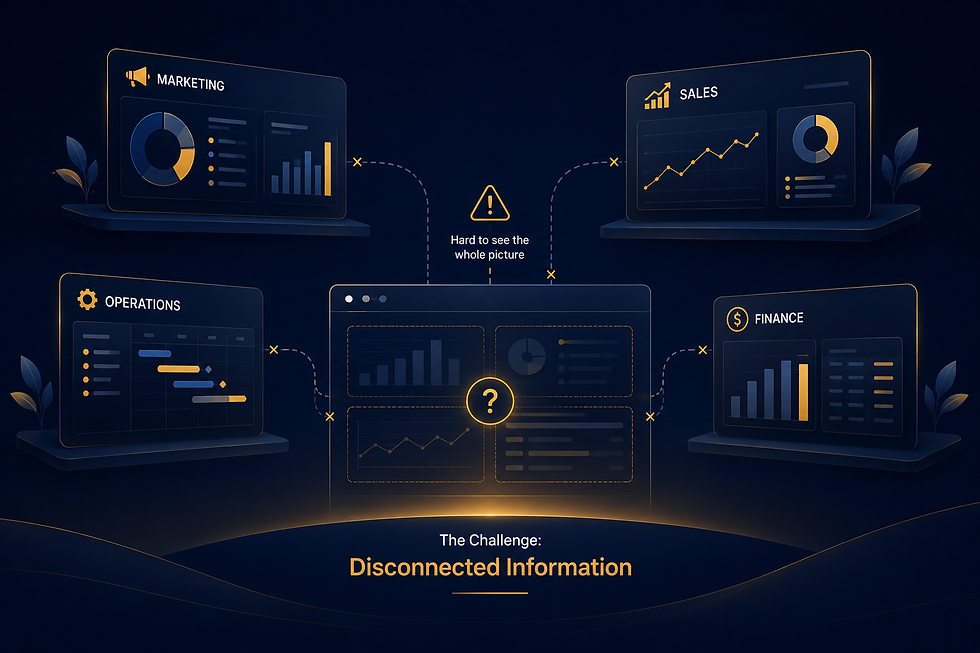
Information becomes scattered across meetings, emails, chat messages, and project management tools. Everyone has access to part of the picture, but very few people can see the whole picture.
It Isn't a Communication Problem
When leaders feel like they're losing visibility, the first assumption is usually that communication needs to improve.
While communication is important, more conversations don't always create more clarity.
Imagine Marketing preparing for a campaign based on a product launch scheduled for next month.
Engineering has already adjusted the release timeline after identifying technical issues.
Customer Success is still communicating the original date to clients.
No one intentionally withheld information.
Each team simply worked from the information available to them.
Situations like this happen because visibility is fragmented, not because people aren't communicating.
As organizations become more complex, improving Cross-Functional Team Alignment becomes just as important as improving communication itself.
The Cost of Limited Visibility
Operational visibility affects much more than project status.
It influences how quickly leaders can make decisions, how effectively teams collaborate, and how consistently projects are delivered.
Without clear visibility:
Risks aren't identified until they've already affected delivery.
Teams unknowingly compete for the same resources.
Priorities become unclear as new work is introduced.
Leaders spend more time requesting updates than making decisions.
Over time, the business becomes reactive instead of proactive.
This is often why Projects Fall Behind (And How to Fix It) becomes such a common conversation in growing organizations. Most projects don't suddenly fail. They gradually drift off course because small issues aren't identified early enough.
Why Leaders Become the Reporting System
One of the most overlooked consequences of poor operational visibility is the pressure it places on leadership.
When teams don't have a shared view of project progress, information naturally flows through one person.
Usually, that's the CEO.
Instead of focusing on growth, they're answering questions, coordinating priorities, following up on deliverables, and connecting teams that should already be aligned.
Over time, the CEO becomes the reporting system.
This is exactly how many leaders unintentionally become project managers, a challenge we explored in How CEOs Accidentally Become Project Managers.
The longer this continues, the more difficult it becomes to step back into a strategic leadership role.
What Better Visibility Looks Like
Businesses with strong operational visibility don't necessarily have more meetings or more software.
They have better structure.
Projects have clear ownership.
Progress is tracked consistently.
Teams understand priorities.
Leadership can quickly identify risks without asking every department for updates.
Most importantly, information is shared through systems rather than individual people.
That allows leaders to spend less time gathering information and more time making informed decisions.
Moving Forward
Growth naturally creates more complexity.
Losing visibility doesn't have to be part of the process.
As your business grows, it's worth asking a few simple questions:
Can leadership quickly understand the status of every major initiative?
Are project risks identified early or only after deadlines slip?
Do teams share the same view of priorities?
Is important information available through your systems or only through specific people?
If these questions are difficult to answer, it may not be a people problem.
It may simply be time for your project management approach to evolve alongside your business.
At Fractional Project Management, we help growing organizations build the structure, visibility, and consistency needed to manage projects with confidence without adding unnecessary complexity.
Schedule a Discovery Call to learn how we can help your business improve operational visibility and create a stronger foundation for growth.


Comments