
How to Choose the Right Project Management Tool for Your Team


As organizations grow, projects become more complex. Teams expand, workflows multiply, and communication starts happening across multiple platforms. Without the right systems in place, even strong teams can struggle with visibility, accountability, and execution.
Choosing the right project management tool for your team is not simply a software decision. It is an operational decision that directly impacts collaboration, delivery timelines, reporting, and overall project performance.
The challenge is that most businesses do not fail because they lack tools. They fail because the tools they adopt do not align with how their teams actually work.
Here is how growing organizations can evaluate project management systems more effectively.
Start With Operational Problems, Not Features
One of the most common mistakes companies make is choosing a platform based on popularity or feature lists alone.
A project management system should solve operational bottlenecks, not create additional complexity.
Before evaluating platforms, identify the issues your team is currently facing:
Are projects consistently delayed?
Is task ownership unclear?
Are teams working in silos?
Are status updates difficult to track?
Is reporting inconsistent across departments?
Are leaders relying on meetings for visibility?
The right tool should improve clarity, accountability, and execution across the organization.
This is also why many growing companies first assess their delivery structure before implementing new systems. Organizations experiencing repeated execution issues often benefit from evaluating their existing project management maturity and operational processes first, especially when they begin recognizing patterns outlined in articles like The 5 Stages of Project Management Maturity.

Choose a Project Management Tool for Your Team Based on Workflow Complexity
Not every organization needs enterprise-level software.
A startup managing lightweight workflows may need flexibility and speed. A larger organization managing cross-functional initiatives may require governance, reporting structures, approvals, and resource management.
When evaluating a project management tool for your team, consider:
Team Size
Smaller teams often prioritize simplicity and adoption speed. Larger teams usually require stronger structure and permissions.
Project Complexity
Simple task tracking differs significantly from managing multi-department operational initiatives.
Reporting Requirements
Leadership teams often need visibility into timelines, blockers, capacity, and delivery performance.
Process Standardization
If workflows vary significantly between departments, your platform should support scalable processes without becoming overly rigid.
Integration Needs
Your project management software should integrate with existing systems such as Slack, Microsoft Teams, CRMs, ERPs, or documentation platforms.
The goal is not finding the “best” software on the market. The goal is finding the system your organization will realistically adopt and consistently use.
Prioritize Adoption Over Advanced Features
Many businesses overestimate how much functionality their teams will actually use.
A platform with dozens of advanced features may look impressive during demos, but if adoption is low, operational visibility will still suffer.
Successful implementation depends on:
Ease of use
Clear workflows
Team adoption
Consistent project governance
Leadership buy-in
In many cases, a simpler platform with strong implementation discipline outperforms a highly complex system with poor adoption.
This is especially important for organizations already struggling with cross-functional alignment or inconsistent delivery processes, which is why many operations leaders revisit foundational workflow challenges through resources like How to Improve Cross-Functional Team Alignment before scaling their systems further.

Evaluate How the Tool Supports Accountability
Strong project management systems improve accountability without creating micromanagement.
The right platform should make it easier to answer:
Who owns this task?
What is blocked?
What is delayed?
What is at risk?
What needs escalation?
Clear visibility reduces operational friction and helps leadership teams make faster decisions.
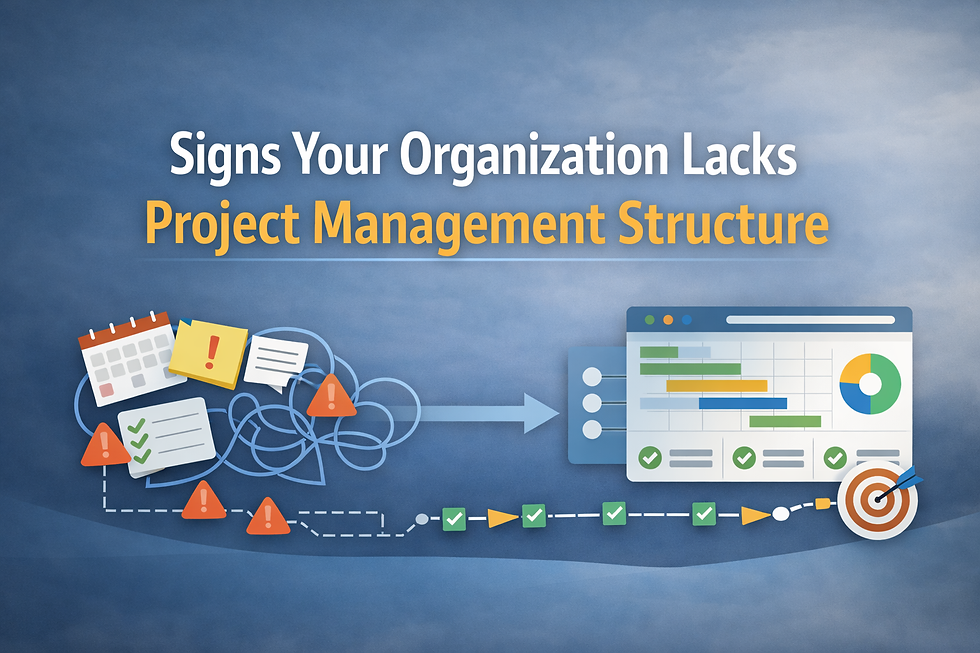
If teams still rely heavily on manual follow-ups, spreadsheets, or status meetings after implementation, the system may not be solving the underlying operational issue. In many cases, this reflects deeper operational gaps that organizations often identify when reviewing common warning signs discussed in Signs Your Organization Lacks Project Management Structure.
Consider Long-Term Scalability
A tool that works for a 10-person team may not support a 100-person organization.
As businesses grow, project environments typically become more cross-functional, more deadline-sensitive, and more dependent on operational visibility.
When evaluating project management systems, consider whether the platform can support:
Portfolio-level reporting
Resource planning
Standardized workflows
Multi-team collaboration
Executive visibility
Process documentation
Governance structures
The implementation process itself also matters.
Poorly implemented systems often create fragmented workflows, duplicate tracking methods, and inconsistent reporting standards.
Technology alone does not solve operational problems. Structure, governance, and adoption are equally important.

The right project management tool for your team should improve visibility, simplify collaboration, and support scalable execution.
The most effective systems are not necessarily the most complex. They are the ones aligned with how the organization operates, communicates, and delivers work.
Before investing in new software, businesses should evaluate whether their current challenges are caused by tooling limitations, process gaps, or operational structure issues.
A well-chosen project management system can strengthen accountability, improve delivery performance, and create better alignment across growing teams.
If your organization is evaluating project management systems or struggling with inconsistent delivery processes, Fractional Project Management can help you build clearer operational workflows, improve delivery visibility, and implement scalable project structures.
Schedule a call with our team to discuss how your organization can improve execution without the overhead of building a full internal PMO.


Comments