
When to Hire a Project Manager vs Improve Your Process


When projects begin slipping, deadlines are missed, and teams feel increasingly reactive, many leaders jump to the same conclusion:
“We need a project manager.”
Sometimes that is true.
But in growing organizations, delivery problems are not always caused by a lack of project management. In many cases, the bigger issue is unclear priorities, weak accountability, inconsistent execution, or missing operational structure.
Before you hire a project manager, it is worth asking a more important question:
Is this a people problem or a process problem?
The answer can save organizations time, budget, and operational frustration.

Why Organizations Often Hire Too Late or Too Early
Growing companies often experience delivery friction before realizing what is causing it.
Projects start competing for resources. Teams struggle with prioritization. Leadership spends more time chasing updates. Execution slows.
The immediate reaction is often to hire someone to “manage projects.”
But adding a project manager to a broken system rarely fixes the underlying issue.
A strong project manager can improve coordination, visibility, and execution—but they still need operational clarity to succeed.
If priorities constantly change, accountability is unclear, or workflows are undefined, even experienced project managers will struggle.
Organizations facing these issues may benefit from first evaluating their current delivery environment in How to Evaluate Your Current Project Management Effectiveness.
Signs You Should Hire a Project Manager
There are situations where hiring project management support becomes the right move.
You may need to hire a project manager when delivery complexity begins outgrowing leadership capacity.
Some common indicators include:
1. Leadership Is Acting as the Project Manager
When founders, executives, or department heads spend too much time coordinating tasks, chasing updates, and managing timelines, execution often slows.
Leadership should focus on priorities, decision-making, and removing blockers—not project coordination.
This is especially common in growing businesses where CEOs unintentionally become operational coordinators.
Related reading: How CEOs Accidentally Become Project Managers
2. Cross-Functional Work Is Becoming Harder to Coordinate
As organizations scale, projects rarely stay within one department.
Sales, operations, finance, product, and leadership teams become increasingly interconnected.
If handoffs are failing, communication feels inconsistent, or dependencies regularly create delays, project management support may improve visibility and coordination.
3. Projects Are Increasing in Volume or Complexity
A growing number of initiatives usually increases delivery risk.
When organizations manage multiple priorities simultaneously, a dedicated project manager can help:
Maintain execution momentum
Improve accountability
Coordinate dependencies
Increase reporting visibility
Reduce operational friction
In these cases, project management support creates operational leverage.
Signs You Should Improve Your Process First
Sometimes the better decision is not to immediately hire a project manager, but to improve the system around delivery.
If foundational execution problems exist, fixing process issues often delivers greater impact.
1. Priorities Constantly Change
If every initiative feels urgent, teams become reactive.
Project managers cannot create clarity where leadership priorities remain inconsistent.
Before adding headcount, organizations may need stronger prioritization systems, operational rhythms, and clearer delivery governance.
2. Ownership and Accountability Are Unclear
Missed deadlines often happen because no one truly owns outcomes.
Questions like these are warning signs:
Who approves decisions?
Who owns delivery?
How are blockers escalated?
What reporting cadence exists?
Without accountability systems, execution becomes dependent on follow-ups rather than structure.
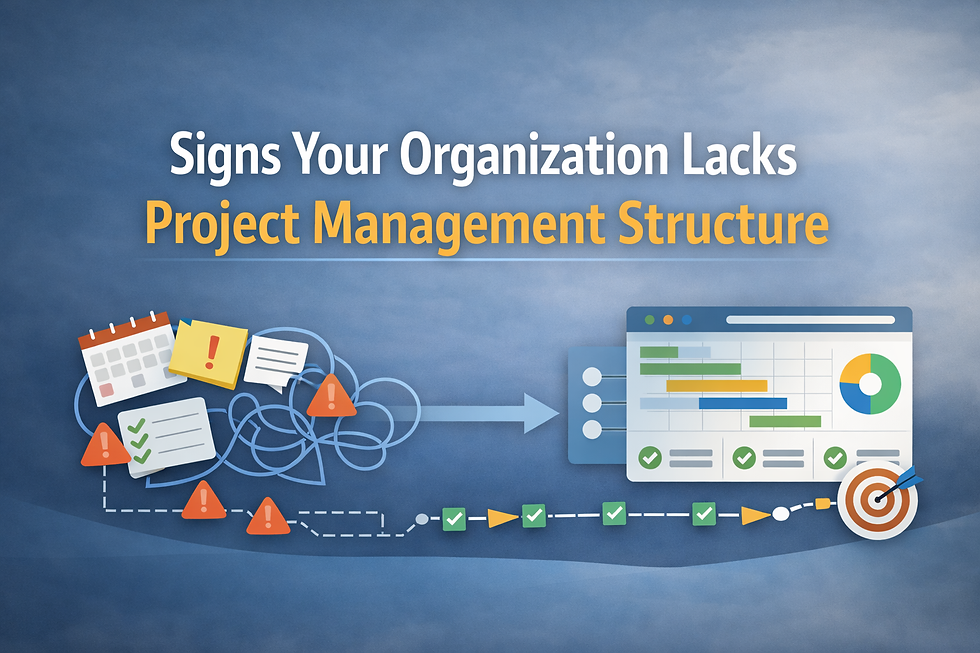
Organizations struggling here may recognize some of the warning signs discussed in Signs Your Organization Lacks Project Management Structure.

3. Teams Lack Consistent Processes
When every project operates differently, delivery becomes unpredictable.
Examples include:
No standardized workflows
Inconsistent reporting
Undefined timelines
Reactive communication
Missing delivery visibility
In these situations, project management process improvement may have more impact than immediately hiring a project manager.
Sometimes organizations need better systems before adding additional coordination layers.
A Better Question: What Is Actually Causing Delivery Problems?
Instead of asking:
“Should we hire a project manager?”
Leaders should ask:
“What is slowing delivery?”
If delivery problems come from growing complexity, coordination gaps, or lack of execution oversight, hiring project management support may help.
If problems stem from unclear priorities, weak accountability, or inconsistent execution systems, process improvement may be the smarter first step.
Often, the answer is a combination of both.
That is why many growing companies benefit from flexible project leadership models before committing to a full-time hire.
Final Thoughts
Hiring a project manager is not always the first answer to delivery challenges.
Sometimes organizations need more coordination.
Sometimes they need better systems.
The strongest delivery environments combine both: clear operational structure supported by effective project management.
Before you hire a project manager, take time to evaluate whether your biggest challenge is execution capacity, or execution clarity.
The right answer depends on what is actually slowing delivery.
At Fractional Project Management, we help growing organizations evaluate delivery challenges, improve execution systems, and determine when project management support makes sense. If projects feel harder to manage as your business scales, schedule a call to discuss whether the right next step is better process, project leadership, or both.


Comments